

Once upon a time in Tunisia… the satirical press!
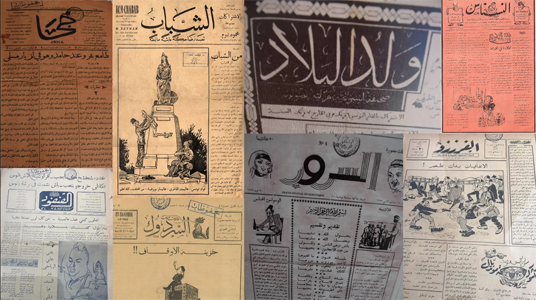
Contrary to what most readers of the written press think, like the Canard enchaîné and Charlie Hebdo in France, in Tunisia, satire was indeed present in the Tunisian media landscape especially before the advent of the 'independence.
By Abdel Aziz HALI
During the 23 years of Ben Ali's reign, the press, all genres combined, vegetated under a leaden screed called censorship, satire made a few splashes through articles either on the side of cyber-dissidents like Zouhair Yahyaoui through his "Proxy" column published on its website (webzine) "TUNeZINE.com".
On the other hand, during the 32 years of Bourguibisme, despite an authoritarian and individualist regime, criticism and especially the satirical press were more or less present in the paper press such as the case of "El-Kanfoud" (the hedgehog, in French: a general and satirical weekly founded by Habib Borji in 1962 and which lasted until 1964), "Es-Sitar" (the curtain, in French: a bimonthly created by Mohamed Jaziri in 1956 and which only appeared 'in 1956 and between 1960 and 1961), "El-Ifrit" (the ogre, in French: a satirical newspaper published in 1957), "El-Imtaâ" (satisfaction, in French: a satirical and hilarious newspaper published in Arabic language by the press club at the youth and culture house of Menzel Temime between 1979 and 1980 and the weekly "Le Phare" by Abdejlil Behi.
But who says satirical press under our skies, also says the rhyme-based writings written in the second degree to circumvent the law or the censorship of the "ticket seller" star of "Assabah" (in the morning, in French: the main Arabic-speaking daily of the country founded on February 1, 1951 by the late Habib Cheikhrouhou), the great journalist the late Mohamed Guelbi (a philosopher by training who started his career at the TAP agency, Tunis-Afrique-Presse, in 1974-Editor's note) with his "Lamha" (wink) and especially his legendary "Harboucha" (pill, in French) - a critical post published from 1977 to 1978 on the columns of the newspaper "Echaâb" (the people, in French: the press organ of the central union, the General Tunisian Union of Labor - UGTT) - or the chronicles of Taher Fezaâ, between the 1970s and 1980s, in the weekly "Tunis Hebdo" (a newspaper founded by M'hammed Ben Youssef and which appears each Monday since 1973-Editor's note) and by Hatem Belhaj in the same publication.
Through this article, we will try to shine a spotlight on the history of the satirical press in Tunisia and its epics, a question of waking up the sleeping ogre among Tunisian journalists.
From 1881 until the 1920s: the golden age of satire in Tunisian sauce
By diving into the archives of the National Library, we were surprised by the density of satirical weeklies in Tunisia at the time of the French protectorate. Indeed, the written press in Tunisia, whether Arabic-speaking or French-speaking, has always been the cradle of satirical caricature and represents with relevance and humor the cracks in the political world. Of course, most newspapers and satirical magazines were in the Arabic language, but that did not prevent French-language newspapers from being as present.
If the satirical press started to hit the headlines from 1906 through numbers like "El-Mozeêj" (disturbing him, in French) and "Tarwih Ennoufous" (entertaining him, in French); however, and for many historians, the real start of the satirical press in Tunisia began with the publication of "Kara-Kouz" (the clown, in French: a satirical weekly founded by Stenk Razine and published in 1884).
Then, in 1886, the bulletin "Machrah el-Isdar" in Hebrew by Jacob Hayek appeared in the form of 4 large pages with a circulation of 400 bulletins per week, followed by "Le Charivari tunisien" (satirical, humorous and political weekly illustrated appearing every Sunday, co-founded by JB Fray and Horace Meunier in 1887 and published until 1889). Then it was the turn of a certain Maurice who published, between 1887 and 1888, "Le Grelot tunisien" (satirical and illustrated weekly).
Also in 1888, it was the turn of Raphaël Smadja who edited, in 1888, another newspaper in Hebrew entitled "El-Moristane" (the hospital, in French), to be followed by the following titles: "La Petite Tunisie" (general weekly with a satirical vein founded by Emile Lacroix and published between 1888 and 1938), "Pilori tunisien" (weekly, independent, satirical and political founded by G. Sdnac with only 43 issues between 1892 and 1893), "Le Tunisien" (organ of indigenous interests with a satirical vein founded by Ali Bach Hamba published between 1907 and 1912), "Abou Guecha" (satirical weekly newspaper founded by Hachmi Tounsi and published only in 1908), "Weld el-Bled" (the child of country, in French: a satirical and humorous weekly founded by Bachir Fourti and published only in 1910, date of its creation), "Abou Nouwâs" (a weekly, satirical and hilarious and renowned for its acerbic and acidic criticism, founded by Slimen ElJadoui - originally a seller of wool and carpets - and published only one year between 1909 and 1910), "La Tunisie illustrée" (a satirical and popular Tunisian monthly review, founded by Doctor Lemanski and published between 1910-1922) , "Al-Modh'hek" (humorist, in French: a satirical and humorous weekly founded by Abdallah Zarrouk published between 1910-1923, with a publication halt on March 12, 1911 and a resumption in 1920), "En- Nems "(the snoop, in French": a weekly newspaper founded in 1910 by Mohamed Ben el Haj Mahmoud Ettounsi and which lasted until 1937, note that it ceased to appear in November 1911 and reappeared in 1920, "Gazdour" (the show-off, in French: a reforming and satirical monthly, founded by Hamouda Abassi in 1920), "El-Wided" (love, in French: a satirical and humorous weekly founded by Chedly Ben Mohamed Beldi and published between 1920 and 1921, "Al-Moumathel" (the actor, in French: a satirical weekly founded by Slouma Aberrazak and published from 1920 until December 15, 1924), "El-Kairaouan" (Kairouan, in French: a satirical weekly and humorous founded by Jilani el Hmar and published for 4 years between 1920 and 1924), "Jeha" (a satirical and humorous weekly founded by Ahmed Ben Chikh Benaissi in 1909 and published irregularly: 1909-1911, 1920-1925, 1936 -1942 and from 1947 until 1950), "An-Nadim" (the companion, in French: a satirical weekly newspaper founded in 1921 by Houcine Al Jaziri - one of the greatest Tunisian journalists of his time and one of the pioneers of this press - and published without interruption ion for 22 years) and "Ez-Zahou" (the festive atmosphere, in French: a humorist and satirical weekly founded by Othman Gharbi in 1921 and published until 1962. It ceased to appear between 1935-1936 and between 1943 -1945).
From 1930 to 1957: a vintage at the service of the nationalist movement
On the other hand, during the 1930s and 1940s, the Tunisian satirical press largely contributed to the nationalist movement guided by a plethora of politicians and emblematic figures of bohemia and the spleen of the intellectuals of the group "Taht Essour" (a collective which met in a homonymous cafe located in the popular district of Bab Souika against the ramparts of the medina of Tunis-Editor's note), such as: the short story writer, playwright, lyricist, journalist and caricaturist, Ali Douagi (born on January 4, 1909 in Tunis and died May 27, 1949 in Tunis) who founded in 1936 his own satirical weekly "Al-Sourour" (the gaiety, in French), the journalist Abdelaziz Aroui through "Le croissant" published in 1930 ( a large weekly political, satirical, economic), the Tunisian journalist, Zitounian by training Mr. Mohamed Mokhtar Saâda, (born in 1894 in Tunis and died in 1962) and member of the troop th Tunisian theatrical "Echahama El Arabiyya" (Arab chivalrous nobility, in French) which created the satirical weekly "En-Nasnas" (the curious, in French), the first number of which appeared in newsstands on Monday November 16, 1936 and Hédi Laâbidi - who started his career as a journalist at 16 - and will remain one of the fathers of the militant press under our skies by giving birth to "El-Ferzazzou" (the wasp, in French: a satirical and critical weekly published between 1955 and 1956).
It should be noted that in the newspaper "Al-Sourour" by Ali Douagi, the great Tunisian poet and writer, Mustapha Khraïef (born in 1909 in Nefta and died on March 21, 1967 in Tunis) ran a column of literary reviews entitled " Mourajaât sahafia "(media reviews, in French) through articles written" in pure Tunisian dialect using linguistic tricks evocative of the abuse suffered by the Tunisian people on the part of French settlers ".
Among other satirical titles during this auspicious period for journalists, we quote: "The young Tunisian" (a biweekly political for the defense of Tunisians with a satirical vein, founded by Sadok Elakhal and published between 1932 and 1936), "Petit tunisois "(A satirical, political and literary daily founded by Mahmoud Aslan published between 1934 and 1957)," El-Inchirah "(the opening, in French: a bimonthly satirical founded in 1937 by Mohamed Mahmoud Ellouz)," Es-Sardouk " (le coq, in French: a satirical and humorous illustrated weekly founded by Chedly Fehri in 1922 but which appeared regularly between 1937 and 1939), "Sabrah" (patient, in French: a satirical weekly founded by Taher Zarrouk and published between 1937 and 1939), "Zahou el-Bal" (the gaiety of the spirit, in French: a satirical and humorous weekly founded by Arbi Turki and published in 1936), "Edifaâ" (defense, in French: a satirical weekly e and illustrated generalist founded by Kacem Letaïef and published between 1936 and 1937), "Ech-Chabab" (youth, in French: a satirical and humorous weekly founded by Mahmoud Bayram published between 1936 and 1937), "Kol chay bel makchouf" (cards on the table) (satirical, critical and political weekly founded by Hedi Saïdi published between 1937 and 1939), "Al-Montakid" (the critic, in French: a satirical weekly, critic and generalist founded by Amor Ata, published between 1938-1939), "Al-Kachkoul" (the mask, in French: a satirical and political weekly in Arabic published in 1937 and founded by Hassan Ali Ayadi), "El-Anis" (the accompanist, in French: satirical and critical weekly founded by Mohamed Chabchoub and published from 1937 until 1955 in an irregular manner in: 1937, 1938, 1947, 1949-1950, 1953 and 1955), "Belmakchouf" (transparently, in French: a newspaper founded by Taher Zaknani in March 1951), "Er-Rakib" (the supervisor, in French: a humorous and critical satirical weekly, founded by Ali Mâaoui in 1948 and which lasted until 1949) and "Al-Nichan" (decoration, in French: a satirical weekly founded by Abdelmalk Kborsli and published only in 1953).
Since 2013, “LerPesse” has been collecting clicks…!
After the "jasmine revolution", on August 18, 2011, the journalist Slim Boukhdir founded "El-Gattous" (the cat, in French) and which ceased to appear in 2012: an Arabic satirical weekly - printed every Thursday out of four pages in tabloid format - illustrated by caricatures of Mohamed Adel Zaza and who included among his contributors Taoufik Ben Brik (journalist and writer known for his opposition to the ousted regime of Zine el-Abidine Ben Ali-Editor's note).
In addition, T. Ben Brik gave birth to a bilingual "Dazibao": "Dhed essolta" (Arabic version) and "Against the power" for French-speaking readers. This "Tract" was published from 2012 to 2014 with the sole guideline: "do in the spectacular satirical" with the contribution of the anonymous cartoonist, -Z-.
Clearly, with such a bouquet of satirical newspapers (paper support) published since the end of the 19th century, a question arises: what prevents, like a phoenix rising from the ashes, that one of these titles is making a comeback on the Tunisian journalistic scene?
In addition, T. Ben Brik gave birth to a bilingual "Dazibao": "Dhed essolta" (Arabic version) and "Against the power" for French-speaking readers. This "Tract" was published from 2012 to 2014 with the sole guideline: "do in the spectacular satirical" with the contribution of the anonymous cartoonist, -Z-.
Certainly, since the evening of November 13, 2013, our colleagues from "LerPesse" (a connected magazine, whose motto: "Serious information in the image of the country"), whose name is an anagram of La Presse - le Dean of Tunisian media and the main French-language daily newspaper in Tunisia founded on March 12, 1936 by the late Henri Smadja -, distill satirical articles (shared in mass on Facebook), parody the national news with a lot of offbeat humor and divert the media codes with a pinch of derision, but this electronic journal remains for the moment a real UFO (unidentified flying object) journalistic not to say a light in the greyness of the Tunisian Web.
Finally, it should be remembered that the Tunisian-Tunisian artistic and journalistic landscape is full of caricaturists and talented cartoonists like Tawfik Omrane, Chedly Belkhamssa, Imed Ben Hmida, Habib Bouhawel, Seif Eddine Nechi, Mahjoub, Nadia Khiari alias "Willis from Tunis", Adel Imbaya, -Z- (a "cartoonist" under X), Abdelkader Chelbi, ADENOV, Lotfi Ben Sassi alias "Bok-Bok" ... and the list goes on.
*Please note that this article was translated to English and may contain errors. You can find the original article in our source.*
Source